This is the hardest post to write, because it is addressed to the people who did everything right.
Not the people who took shortcuts. Not the people who gambled and lost. The people who followed the instructions precisely: get the grades, take the debt, do the internships, grind through the entry-level years, build the execution skills, earn the promotions. The people who delayed gratification for years on the specific promise that the system would reward compliance.
The system changed the rules mid-game. And it did so while continuing to collect tuition.
Act 1: The Betrayal
The social contract that underwrote the credential economy was explicit: invest in the credential, the credential unlocks the career, the career rewards the investment. This was not a myth or a misunderstanding. For most of the twentieth century, it was approximately true. The credential reliably unlocked execution-layer roles at premium compensation. The career rewarded the investment. The contract held.
What broke the contract was not bad faith on any individual's part. It was a structural repricing event that happened at the execution layer — the layer that credentials were primarily designed to certify competence at. When AI automated the execution layer, the credential's primary value proposition evaporated. Not gradually. In a matter of quarters.
The 45% drop in entry-level job postings in Q1 2025 is the data version of this betrayal. The Stanford HAI finding of a 13% decline in early-career employment for college graduates is the human version. These are not statistics about the economy in the abstract. They are statistics about specific people who did what they were told and arrived at a closed door.
Acknowledging this fully is not self-pity. It is accurate diagnosis. The people who skip directly to "here's what you do now" without sitting with the genuine injustice of what happened to people who complied in good faith are selling a product, not telling the truth. The truth is: a lot of people got hurt by a transition they didn't design and couldn't have anticipated, and calling that "an opportunity" before acknowledging that it was first a loss is dishonest.
Take the time to acknowledge the loss. Then turn.
Act 2: What Actually Survived
The credential did not survive intact. The career path the credential promised did not survive. The execution-layer roles the credential unlocked did not survive at the same scale or compensation.
Here is what survived: the domain expertise that four years of focused education and several years of professional execution actually produced.
Not the certificate. The knowledge underneath it. The accumulated understanding of how a specific field works — its logic, its conventions, its failure modes, its opportunities, its relationships between variables that only become visible after years of operating in that context. This knowledge did not depreciate when the execution layer was automated. It became more valuable — because the execution layer that used to provide cover for it has been stripped away, and what remains is what was always the actual value.
A financial analyst whose execution skills have been automated still knows which metrics matter in their specific industry, which ratios are meaningful signals versus noise, which patterns precede specific outcomes, which risk categories are worth taking seriously and which are theater. AI can run the analysis. Only the analyst knows which analysis to run and what the output means in context.
A lawyer whose junior associate work has been automated still knows which regulatory interpretation has teeth, which argument this specific judge finds persuasive, which risk is worth taking in this specific jurisdiction with this specific opposing counsel. AI can review the contract. Only the lawyer knows what to do with the review.
The credential is a death certificate for the execution path it promised. The domain expertise underneath it is the most valuable thing in the room, and for the first time in the credential economy's history, it is available to be priced on its own terms.
Act 3: The Pivot
The Bankruptcy-to-Blueprint Protocol has three phases. This is not a motivational framework — it is a technical repositioning process.
Phase 1: Bankruptcy Assessment. Inventory your current skills and classify each with precision. Execution skills — tasks that AI can perform given well-specified direction — are the bankrupt category. Domain judgment skills — the accumulated contextual knowledge that AI cannot derive from public training data — are the surviving assets. Be rigorous. The tendency is to classify more things as irreplaceable than actually are. The brutal classification produces a more useful picture than the generous one.
Phase 2: Expertise Unbundling. The domain expertise was always there, always real, always valuable. It was packaged with execution work that has now been automated. Unbundle it. What does your domain knowledge enable a client to do that they could not do without it? What decisions does it inform that no AI output makes correct without your interpretation? What risks does it identify that are only visible to someone who has operated in this specific field in this specific way? This is the product. Price it as the product.
Phase 3: Blueprint Build. Domain expertise directing an AI execution layer is the Solo Operator model. You are the Architect. The AI is the Analyst. The AI produces outputs; you validate, interpret, and direct them toward outcomes that require your judgment to identify. You bill for the judgment, not the execution hours. The execution hours are now near-zero cost. The judgment is what was always worth paying for.
The output of Phase 3 is a business model. Not a job. Not a career path that credentials unlock. A business model where the asset is irreplaceable domain knowledge directed at outcomes that clients pay for, with AI infrastructure reducing the cost of execution to the point where the margin on that domain knowledge is substantial.
The Three Books, at This Point in the Story
This post draws from all three books because this is where all three converge.
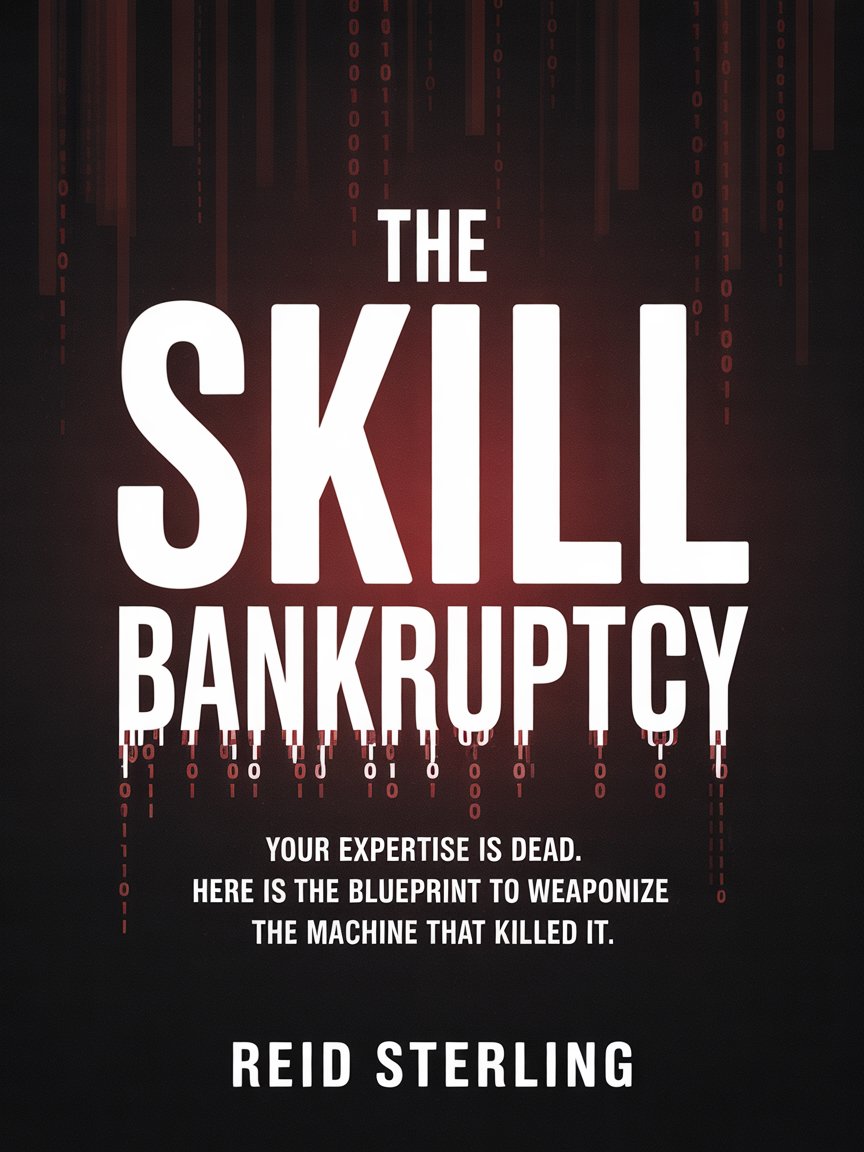
The Skill Bankruptcy provides the technical framework: the Bankruptcy Assessment, the Domain Translator positioning, the Anti-Commodity Pricing model, the Solo Operator build. If you read one book from this situation, this is the one.
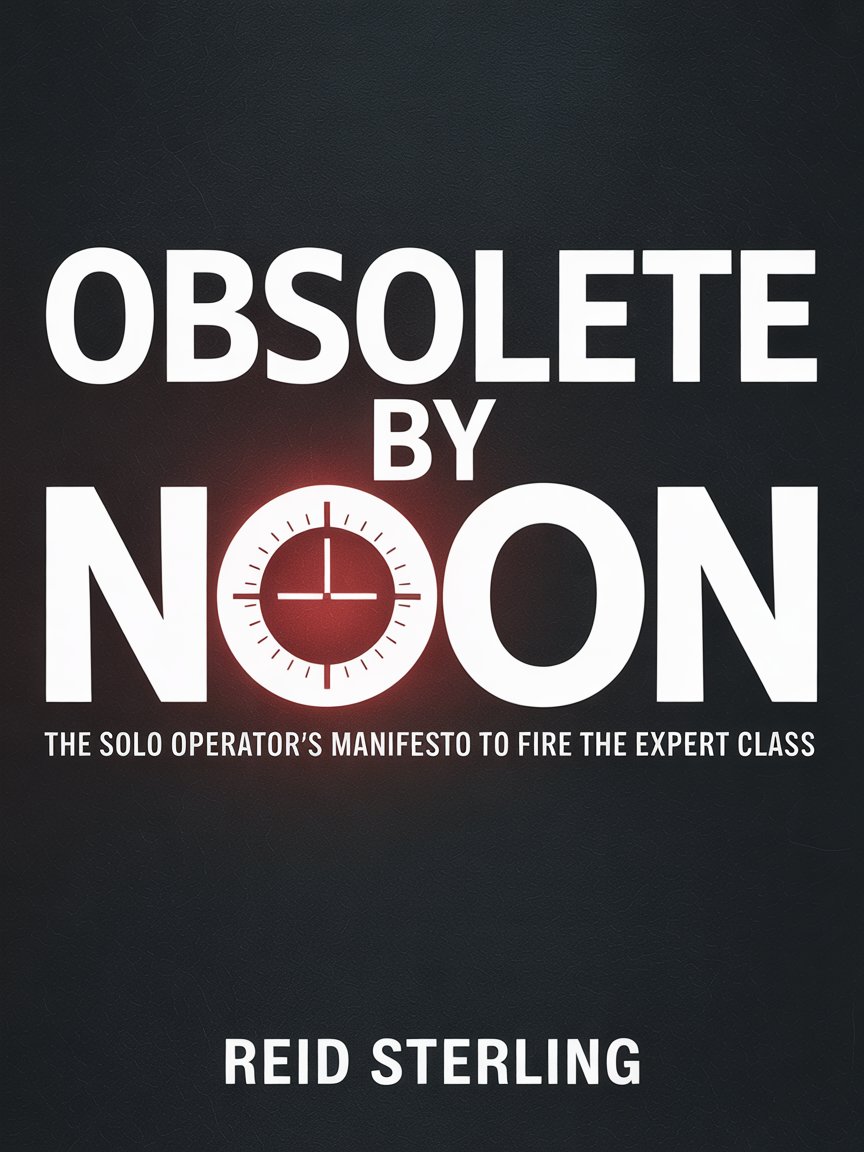
Obsolete By Noon provides the operational stack: the Consultant Killer Stack that gives the Solo Operator the execution infrastructure that was previously accessible only through expensive professional services retainers. The 90-Day Escape Plan. The Noon Doctrine. The practical how-to of running at department scale alone.
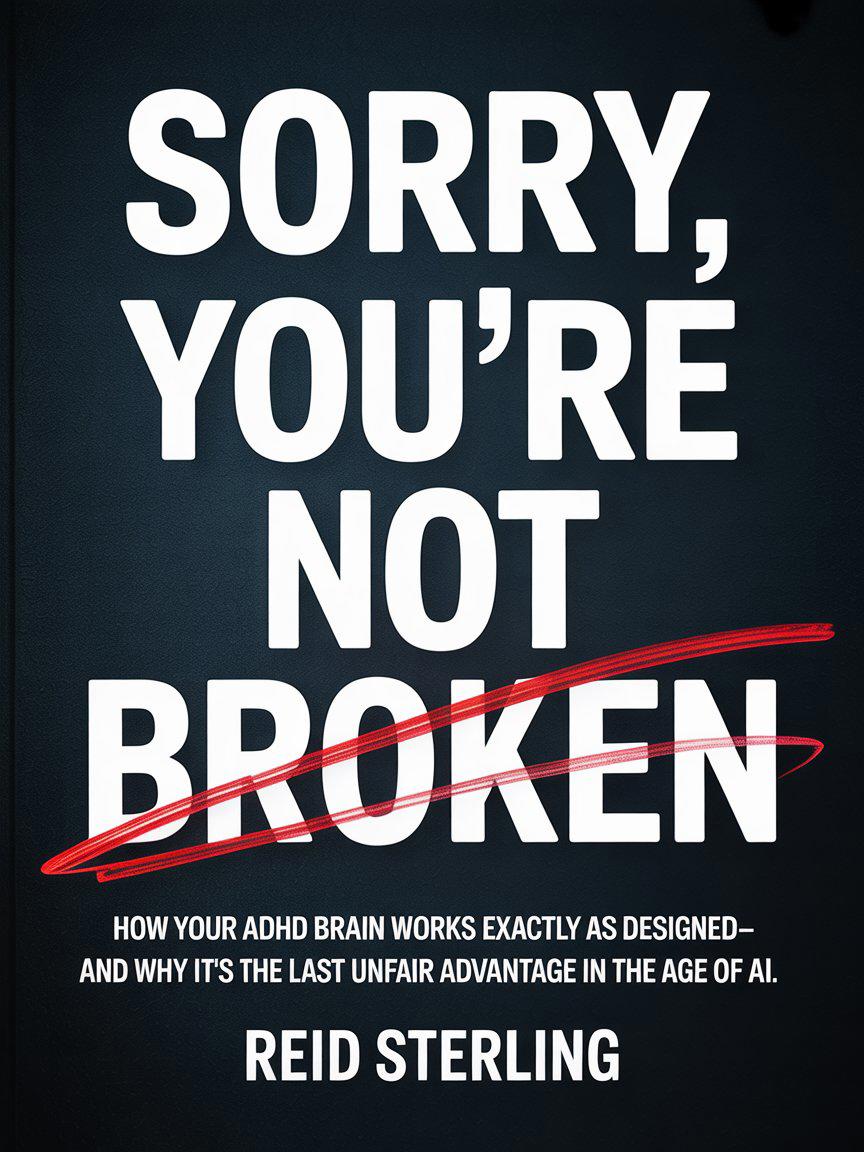
Sorry, You're Not Broken provides the cognitive architecture: if you've spent years feeling wrong for not fitting the execution-layer model that just got automated — if the restlessness, the hyperfocus, the inability to sustain interest in routine work felt like a character flaw rather than a hardware specification — this book makes the case that your brain was building toward this moment, not away from it.
Three books. One situation. You did everything right. The system changed the rules. The expertise you built is more valuable than the path that delivered it. Build from what survived.
The credential's career-unlocking function has been devalued — entry-level postings dropped 45% in Q1 2025. But Sterling makes a critical distinction: the credential is not the same as the domain expertise it produced. The degree may be a death certificate for the path it promised. The knowledge underneath it may be more valuable than ever — if unbundled from automated execution work and positioned as domain direction for AI systems.
Sterling's three-act structure: Act 1 (Diagnosis) — acknowledge the data about your field's automation trajectory without softening it. Act 2 (Pivot) — identify the domain expertise developed through the credential, unbundled from automated execution work. Act 3 (Blueprint) — reposition that domain expertise as the Architect layer directing AI execution, price it as judgment outcomes rather than execution hours.
Degrees whose primary pathways involved execution-layer knowledge work: accounting, financial analysis, paralegal/legal research, standard engineering implementation, marketing/communications content roles, data analysis, HR administration, and general business administration. Less affected: degrees requiring irreplaceable domain judgment, physical presence, or navigation of uniquely human social complexity.
The traditional ROI calculation was built on labor market conditions that no longer fully apply. The income premium assumed credentials reliably unlocked execution-layer roles at premium compensation — with entry-level postings down 45% and 300M jobs exposed to automation, that assumption is now uncertain. Sterling's position: the ROI on the credential is declining; the ROI on the specific domain expertise the credential develops, correctly positioned, may still be positive.
Three phases: Bankruptcy Assessment (classify current skills as automatable execution vs. irreplaceable domain judgment), Expertise Unbundling (separate domain knowledge from the execution work it was packaged with, identify its standalone value), and Blueprint Build (construct the Solo Operator model — AI execution layer directed by domain expertise, priced as judgment outcomes rather than execution hours).